Planned Giving

Planned Giving ensures that the work and mission of Wayzata Community Church will be faithfully advanced for generations to come through legacy gifts of bequests, trusts, or other deferred or estate gifts.

Below, you'll find short, honest answers to the questions people actually ask when they start exploring this. Wherever you're starting from, this is meant to help you take the first step, not hand you a finished plan.

Group of children indoors, some wearing colorful hats and headbands, attentively looking towards something off-camera.

Share Your Blessings for Generations to Come

Planned Giving invites members to respond to God's abundant blessings with a legacy gift, one that benefits others long after it's given and brings its own quiet joy to the giver.

A planned gift is usually made by naming Wayzata Community Church as a beneficiary of a:

Will
IRA/401(k), or Other Retirement Plan Assets
Life Insurance Policy
Bank or Brokerage Account
Revocable Living Trust
Annuity/Income Producing Plan
Other Arrangement

For many, an estate gift ends up being the largest gift they ever give to the place that gave purpose to their life. These gifts are tax deductible to the extent allowed by state and federal law. We encourage you to consult an attorney or financial advisor before finalizing any legacy gift.

Gifts can go to Wayzata Community Church, where principal and earnings support the areas of greatest need, or to the WCC Endowment Fund, where only the earnings are used and the principal stays invested. You don't have to be wealthy to include WCC in your will, trust, or long-range giving plans. Planned giving is for anyone with a generous spirit and a place in their heart for WCC.

Legacy Society

We invite you to become part of the WCC Legacy Society, honoring those who've remembered Wayzata Community Church in their wills and financial plans. If you've already named WCC as a beneficiary through a will, bequest, trust, or other deferred gift, let us know by filling out the Letter of Intent for an Estate Gift so we can thank you now for the legacy you'll leave later. No details about your estate plan are required, and you'll automatically become a member of the WCC Legacy Society.

For more information about including Wayzata Community Church in your estate, or about making a contribution, contact the Director of Operations at (952) 473-8877, ext. 215.

Resources
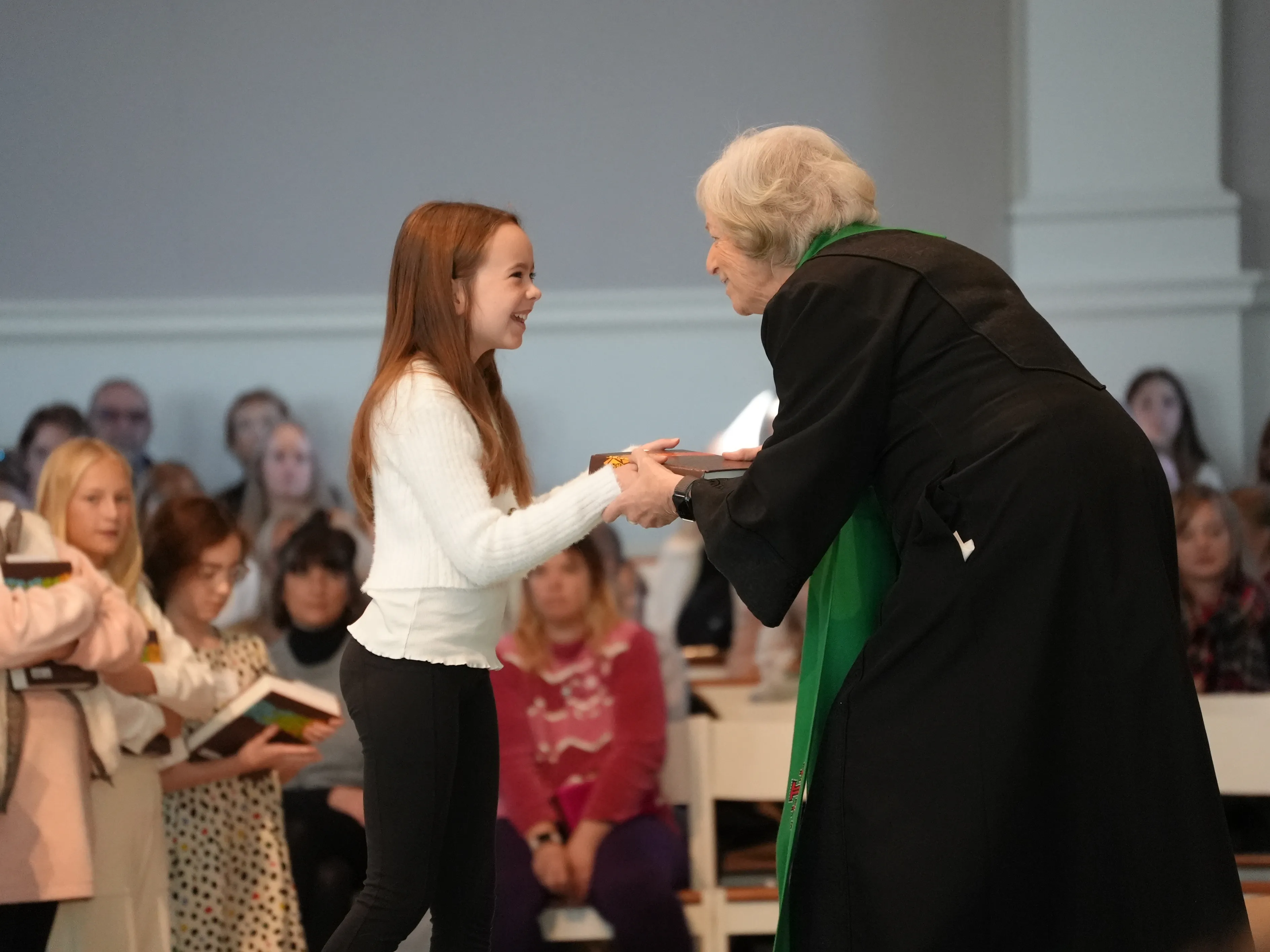
Young girl receiving a book from an elderly woman dressed in black with a green stole, in front of an audience.
FAQs

Getting Started

What is "planned giving," really?

It's any gift you decide on now that takes effect later, through your will, a beneficiary form, a trust, or another tool. No extra wealth required. It's simply a way of saying, ahead of time, what matters to you and who you want to care for.

Why would a church get involved in something as personal as my estate plan?

Because it's not really a financial question first, it's a faith question. What you do with what you've been given says something about what you believe. We'd rather walk with you through that than leave you to figure it out alone.

How can estate planning reflect my faith, not just my finances?

Everything you have was entrusted to you, not earned in isolation. A will or a trust is just a tool. What you put in it, who you provide for, what you give away, is where stewardship actually shows up.

Wherever You Are in Life

I'm young and don't have much saved yet. Does this even apply to me?

Yes, and maybe more than you'd think. If you have kids, a will is how you name who raises them if something happens to you. Without one, a court decides. That's reason enough to start, even before you have significant assets.

How do I choose a guardian for my kids?

Look for someone who shares your values and already loves your children well. Talk with them honestly before you name them. Name a backup too, since life doesn't always cooperate with a first choice.

Need more? Check out this full article.

I don't have much to give financially. Can I still make an impact?

Time and skill count. So do small, consistent gifts. Some of the most meaningful giving starts as a $10 monthly commitment or a Saturday spent showing up, long before it becomes a line in a will.

See more ways to give.

Does the way I give change as I get older?

Usually, yes. Giving tends to start small and local, grow more intentional through midlife, and turn toward legacy in later years. There's no wrong stage to start, only the stage you're in right now.

Find your stage.

The Practical Tools

What's a donor-advised fund?

Think of it as a charitable savings account. You contribute now, get the tax deduction now, and recommend gifts to causes over time, on your own schedule.

Read more about DAFs.

What tax benefits come with planned giving?

Several, depending on how you give: income tax deductions, avoiding capital gains on appreciated stock or property, and reduced estate taxes on charitable bequests. If you're 70½ or older, you can also give directly from your IRA and have it count toward your required distribution. Worth a conversation with your tax advisor to see what fits your situation.

See the full tax breakdown.

What goes into setting up a will?

The essentials: naming an executor, naming guardians if you have minor children, and spelling out who gets what. Most people work with an attorney to make sure it holds up under Minnesota law, then revisit it every few years or after a major life change.

Read the full will-planning checklist.

Ready to go? Check out FreeWill.com to get started. (sponsored by the UCC)

What are my options here in Minnesota?

More than you'd guess: bequests, charitable trusts, donor-advised funds, beneficiary designations, gifts of stock or real estate. Every option lets you support the people you love and the causes you care about at the same time. It's not either/or.

See the full list of giving options.

Leaving More Than Money

What's a legacy letter, and how is it different from a will?

A will handles your assets. A legacy letter handles everything else, your values, your stories, what you hope for the people you love. It's not legally binding. It's just honest, and often it's the part people remember most.

How do I actually start writing a legacy letter?

Start smaller than you think you need to. Write down one story, one lesson, one thing you want your kids to know was true about you. The rest tends to follow once you've started.

Get the step-by-step guide and sample letter.

How does planned giving actually shape what happens at WCC?

It's how ministries outlast a single budget year. Gifts like this have funded everything from youth programs to building upkeep to global missions, work that a single Sunday offering couldn't carry on its own.

See where planned gifts go.

Does Scripture actually say anything about this?

More than a few places. "Each of you should give what you have decided in your heart to give, not reluctantly or under compulsion, for God loves a cheerful giver" (2 Corinthians 9:7). "Honor the Lord with your wealth" (Proverbs 3:9). "Each of you should use whatever gift you have received to serve others, as faithful stewards of God's grace" (1 Peter 4:10). Giving well isn't a new idea. It's a very old one.

Members Share Why WCC is in Their Plans:

"A man has made at least a start on discovering the meaning of human life when he plants shade trees under which he knows full well he will never sit."
Elton Trueblood
Graphic with green leafy tree illustration and text about faithful stewardship, building a legacy of love, family, and faith, for planned giving at Wayzata Community Church.